

Article details
For a G 7000 dishwasher, freshness depends on a clean filter combination and a wiped door seal. A rinse of the filters and a damp cloth along the seal remove the food film behind most odors and cloudy results.
Where does food soil collect inside a dishwasher?
It helps to picture the inside of the machine. Food that comes off the dishes is carried by the wash water to the base of the tub, where the filter combination catches the coarse pieces. Fine film and grease settle on surfaces the spray reaches only briefly, and on the door seal, which the jets do not reach at all. One Miele dishwasher manual notes that the seal and door sides are out of reach of the spray, so mold can develop there. Knowing the two collection points makes the routine obvious: filters in the base, seal at the door.
When does the dishwasher ask you to check the filters?
The display of this class of Miele dishwasher asks you to remove and check the filters after every 50 program sequences. Do not skip it. The manual explains that coarse soil is retained by the filters so that it does not enter the circulation system, and it warns against running the machine without the lower spray arm or the filters. A machine that has skipped checks for months may still run, but cleaning results and smell can slip first.
A careful filter clean
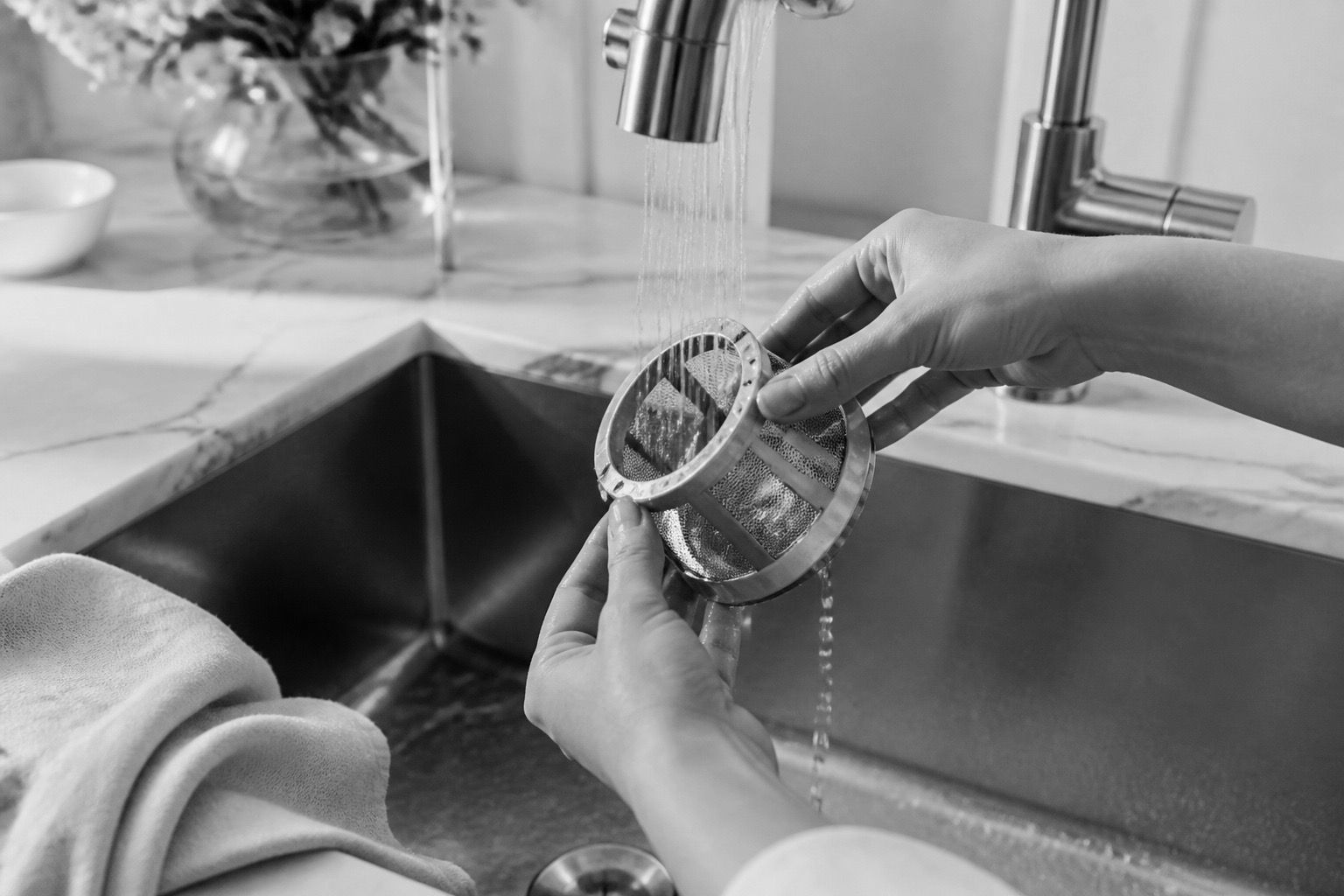
Power the machine off. Take out the lower spray arm, lift out loose coarse soil, and remove the filter combination. Separate the microfilter from its plastic ring and rinse each piece under running water, using a soft brush where soil clings. Put the filter combination back flat in the base, then refit the spray arm by its thread and turn it clockwise until the arrow meets the lock symbol. Take care with fragments of glass, which are hard to see and sharp. Never force a filter that does not sit flat; remove it and look for trapped debris.
Caring for the seal
Wipe the door seal with a damp cloth, including the lower fold where water and soil gather. Check the door sides as well. This is a regular small job rather than an occasional deep clean. If a dark film does not wipe away, repeat on another day and keep an eye on it, but avoid harsh tools that could damage the rubber.
Can program choice cause dishwasher odors?
Yes. The manual links frequent low-temperature programs with a higher risk of bacteria and odors and suggests running a high-temperature program regularly.
The manual links frequent low-temperature programs with a higher risk of bacteria and odors and suggests running a high-temperature program regularly. Pair that with clean filters and a wiped seal for the best effect. If the interior seems wet after the cycle, that is explained in the manual as a result of the drying system and not a fault.
| Care task | Why it helps | How to do it safely |
|---|---|---|
| Check filters at the display reminder | Stops soil from circulating or blocking jets | Switch off, remove the spray arm, rinse all filters |
| Rinse the microfilter | Removes fine film that causes odor | Pull it off its ring, rinse, use a soft brush |
| Refit the spray arm correctly | It secures the filters | Clockwise until the arrow meets the lock symbol |
| Wipe the door seal | Prevents mold where spray does not reach | Damp cloth along the whole seal |
| Run a hot program now and then | Limits bacteria and odors | Use the high-temperature program with filters in place |
| Check hoses every 6 months | Spots damage early | Look at the inlet hose, cord and drain hose |
What fresh does not guarantee
Clean filters and a clean seal improve results but cannot repair a drain or supply fault. If water remains in the tub, the manual suggests cleaning the filter combination, cleaning the drain pump and removing any kink or loop in the drain hose. Pump access requires unplugging and removing a cover, so read the steps carefully and stop if unsure. For a dark display, the manual says to check the plug and the breaker, and to contact Miele Customer Service if the breaker trips again. The data plate holds the model and serial number you will want when you ask for help.
Signs the routine is slipping
A machine usually tells you when care has lapsed. Glasses that feel gritty, a film on plastic, a stale smell when the door first opens, water standing in the base, or a seal with dark spots all point back to the same two places. Start by checking the filter combination and seal rather than changing detergent or program. If results improve after the filters are clean, you have found the cause and the display reminder is doing its job. If they do not, the problem may sit in the spray arms, the water supply or the drain, and the next steps are in the manual.
A few cautions
Do not run the machine while the filters or the lower spray arm are out. Do not use sharp tools on the seal. Keep the power off while your hands are inside the tub base. If you find damage, such as a split seal or a cracked spray arm, stop using the machine and ask for advice rather than working around it. A little care when handling filters also means fewer bent parts and a better fit every time you refit them.
Frequently asked questions
Do I need special cleaners for the filters?
The manual describes rinsing under running water with a soft brush if needed. It does not call for special products.
Why do the filters matter for smell?
Soil trapped in the base sits wet between cycles, which is a common source of stale odor.
Can I extend the drain hose?
The manual says the hose must not be shortened and that extensions must be a Miele extension hose.
What if the filter reminder keeps appearing?
It returns after 50 program sequences. Check the filters each time and reseat the spray arm correctly.
Need help now? Visit our services page or contact us.
Official manuals and support notes are available on Miele Support.